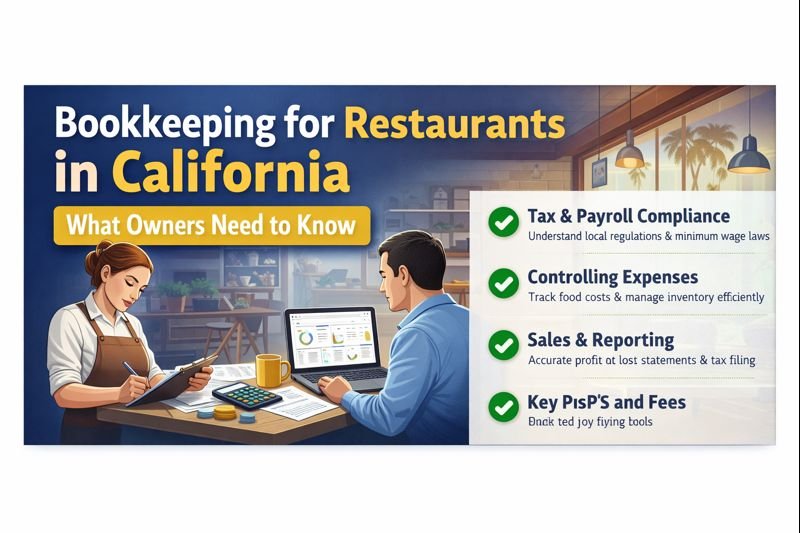
Bookkeeping for Restaurants in California: What Owners Need to Know
Running a restaurant in California is exciting—but managing the finances can be overwhelming. Between thin profit margins, strict labor laws, sales tax rules, and constant inventory turnover, restaurant bookkeeping requires accuracy, consistency, and local expertise.
Why Proper Bookkeeping Matters for California Restaurants
Restaurant bookkeeping goes far beyond tracking income and expenses. Accurate records help you:
Stay compliant with California tax and labor laws
Control food and labor costs
Prepare for audits and sales tax filings
Understand cash flow and profitability
Make informed business decisions
Without reliable bookkeeping, even a busy restaurant can struggle financially.
Unique Bookkeeping Challenges for California Restaurants
California has some of the most complex regulations in the country. Restaurant owners must manage:
1. Sales Tax Complexity
California sales tax rates vary by city and county. Restaurants must properly track:
Dine-in vs. takeout sales
Taxable and non-taxable items
Third-party delivery platform fees
Errors can lead to penalties or audits.
2. Labor Costs and Compliance
California labor laws include:
Higher minimum wages (state and local)
Overtime rules
Meal and rest break penalties
Payroll taxes and workers’ compensation
Accurate payroll bookkeeping is essential to avoid costly violations.
3. Inventory and Food Cost Tracking
Food spoilage, waste, and price fluctuations make inventory tracking critical. Bookkeeping helps monitor:
Cost of Goods Sold (COGS)
Vendor pricing changes
Portion control and waste issues
4. Cash Flow Management
Restaurants often deal with daily cash, credit cards, tips, and third-party apps. Proper bookkeeping ensures:
Deposits match sales reports
Tips are tracked correctly
Fees from delivery platforms are recorded accurately
Best Bookkeeping Practices for California Restaurants
Use Restaurant-Specific Accounting Software
Platforms like QuickBooks, Xero, or restaurant POS integrations help track sales, payroll, and inventory in real time.
Separate Personal and Business Finances
Always maintain a dedicated business bank account and credit card to avoid accounting confusion and IRS issues.
Reconcile Accounts Weekly
Regular bank and credit card reconciliations help catch errors early and maintain accurate records.
Track Key Restaurant Metrics
Good bookkeeping allows you to monitor:
Prime cost (labor + food)
Profit margins by menu item
Daily sales averages
Break-even points
Work With a California-Based Bookkeeper
Local expertise matters. A professional familiar with California regulations can help ensure compliance and identify cost-saving opportunities.
When to Outsource Restaurant Bookkeeping
Many restaurant owners try to manage bookkeeping themselves but quickly realize it takes time away from operations. Outsourcing bookkeeping can:
Reduce errors and stress
Improve financial reporting
Ensure tax and labor law compliance
Free up time to focus on customers and growth
A professional bookkeeper acts as a financial partner—not just a record keeper.