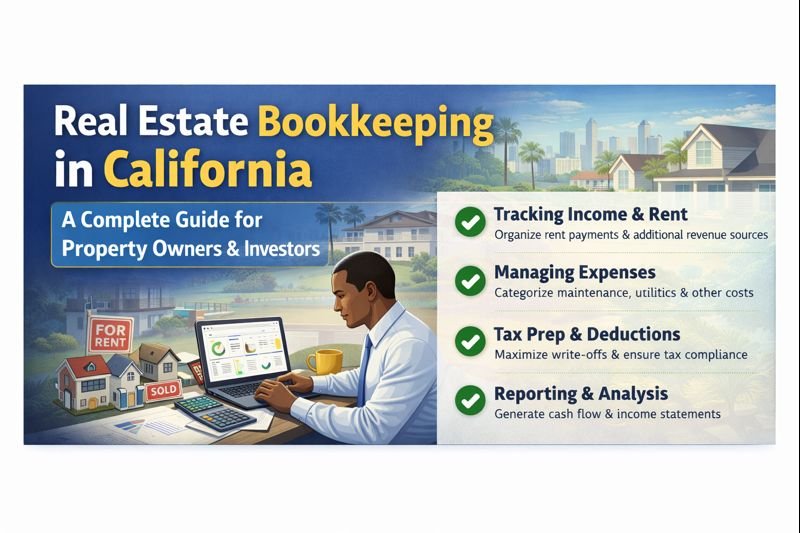
Real Estate Bookkeeping in California: A Complete Guide for Property Owners & Investors
Accurate real estate bookkeeping in California is essential for property owners and investors who want to protect their assets, stay compliant with state regulations, and maximize profitability. With multiple income streams, complex expenses, and strict reporting requirements, proper bookkeeping provides clarity and financial control.
What Is Real Estate Bookkeeping in California?
Real estate bookkeeping involves tracking, organizing, and maintaining financial records related to property ownership and management. This includes:
Rental income and late fees
Operating expenses and repairs
Mortgage and loan payments
Trust account transactions
Capital improvements
Financial reporting and tax preparation
For California property owners, bookkeeping must also align with state-specific regulations and tax rules.
Why Accurate Bookkeeping Matters for California Property Owners
Proper bookkeeping helps you:
Track profitability for each property
Ensure compliance with California tax laws
Simplify year-end tax filings
Prepare for audits
Make informed investment decisions
Without accurate records, it becomes difficult to identify cash flow issues or growth opportunities.
Common Bookkeeping Challenges for California Real Estate Investors
1. Managing Multiple Properties
Each property requires separate income and expense tracking to measure performance accurately.
2. Trust Accounting Compliance
California real estate brokers must follow strict trust accounting rules. Errors can result in penalties or license issues.
3. Expense Categorization
Repairs, maintenance, and capital improvements must be classified correctly for tax and reporting purposes.
4. Rental Income Tracking
Bookkeeping ensures consistent tracking of rent payments, late fees, and security deposits.
Rental Property Bookkeeping Requirements in California
California landlords must maintain accurate records for:
Rental income
Maintenance and repair costs
Property management fees
Insurance and utilities
Property taxes
Trust Accounting Rules for California Real Estate Brokers
If you hold client funds, California law requires:
Separate trust bank accounts
Detailed transaction records
Monthly reconciliations
Best Practices for Real Estate Bookkeeping in California
Use real estate-specific accounting software
Separate personal and business finances
Reconcile bank and trust accounts monthly
Track expenses by property
Maintain detailed documentation
Work with a California-based bookkeeper
When to Outsource Real Estate Bookkeeping
Outsourcing bookkeeping allows property owners and investors to:
Save time
Reduce errors
Improve financial reporting
Ensure compliance with California regulations
A professional bookkeeper can act as a financial partner, providing insights beyond basic recordkeeping.