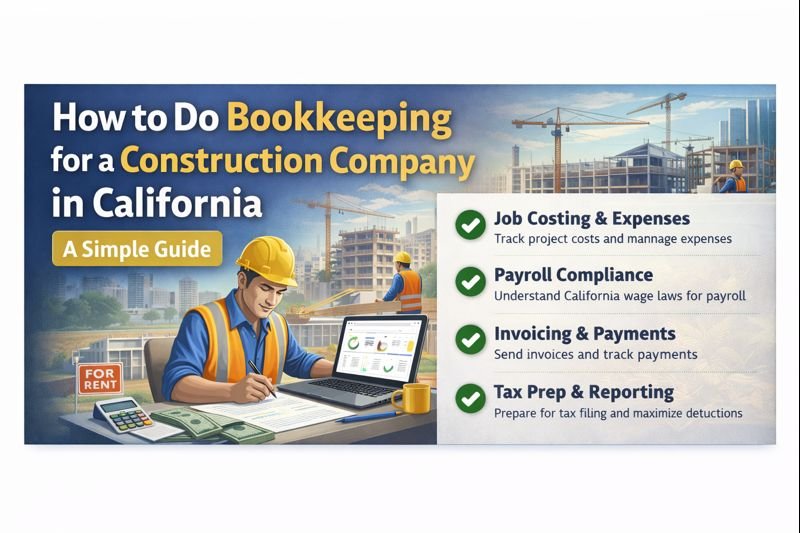
How to Do Bookkeeping for a Construction Company in California: A Simple Guide
How to Do Bookkeeping for a Construction Company in California
Running a construction company in California is no small feat. Between managing projects, coordinating crews, ordering materials, and meeting tight deadlines, keeping your finances in check can feel like another full-time job. But here’s the truth: good bookkeeping is the backbone of a healthy construction business.
With proper bookkeeping, you can track costs, stay profitable, pay your employees correctly, and make smarter decisions—without the constant stress. Let’s break it down in plain language so California construction business owners can feel confident about their books.
Why Bookkeeping Matters for California Construction Companies
Construction companies face unique financial challenges, especially in California:
Multiple projects running simultaneously
Varying job costs (materials, labor, subcontractors)
Equipment purchases, depreciation, and permits
Compliance with California state tax laws and labor regulations
Without proper bookkeeping, it’s easy to lose track of expenses or miss revenue opportunities. Proper bookkeeping gives you a clear picture of profits, project costs, and cash flow, so you can plan for growth instead of scrambling to cover surprises.
Step 1: Set Up Your Accounts
Think of bookkeeping like a filing system. You need accounts for everything that comes in and goes out:
Revenue Accounts: Payments from clients and projects
Expense Accounts: Materials, labor, subcontractors, permits, and California-specific fees
Asset Accounts: Machinery, vehicles, office equipment
Liability Accounts: Loans, lines of credit, taxes owed to the state
Equity Accounts: Owner’s investment and retained earnings
Using accounting software like QuickBooks, Xero, or Sage, tailored for construction companies, keeps everything organized and ready for reporting.
Step 2: Track Job Costs Carefully
Construction bookkeeping isn’t just about paying bills—it’s about understanding how much each project truly costs. In California, tracking costs is crucial because of high labor rates, material costs, and compliance requirements.
Track:
Labor costs: Employees and subcontractors
Materials and supplies: From concrete to hardware
Equipment usage: Fuel, repairs, depreciation
Overhead allocation: Office rent, insurance, and utilities
Separating costs by project helps you see which jobs are profitable and which ones are costing you money.
Step 3: Manage Payroll Accurately
Payroll in California construction can be tricky due to:
Overtime laws and minimum wage regulations
Union rules and certified payroll for public contracts
Multiple job sites
Accurate payroll bookkeeping ensures your employees are paid correctly, your company stays compliant, and you avoid costly labor disputes.
Step 4: Reconcile and Review Regularly
Every month, reconcile your bank and credit card accounts to make sure your records match reality. Regular reviews help you:
Catch errors before they become problems
Spot unusual expenses or missing income
Prepare for California state taxes and permit fees
Consistency is key—better a regular routine than perfection.
Step 5: Work With a California Construction Bookkeeping Professional
Construction bookkeeping has many moving parts. A professional bookkeeper or accountant familiar with California construction laws can help you:
Set up job costing correctly
Handle taxes and compliance, including California state tax codes
Provide financial reports that help you make smarter decisions
Running a construction business in California? Let our expert bookkeepers help you track costs, stay compliant, and grow your profits. Book Your Free Consultation Today!”